Whether you are bringing your more fragile outdoor plants inside when the seasonal temperatures drop, or you’re looking for ways to keep your always-indoor greenery healthy, there are some things to keep in mind when caring for your plants over the cold, low-light months of winter.
In general, the winter months see less light coming into the home, and the air inside is dry due to the running of furnaces and heaters. Dust builds up more quickly, and drafts come in every time there is an open door or window.
Depending on where you live, some of these concerns will be of greater or lesser concern, but in most parts of the world, winter brings some degree of seasonal change. This is also when plants tend to slow their growth, as well as their production of fruits and flowers, and do a bit of hibernating.
Plants: just like us!
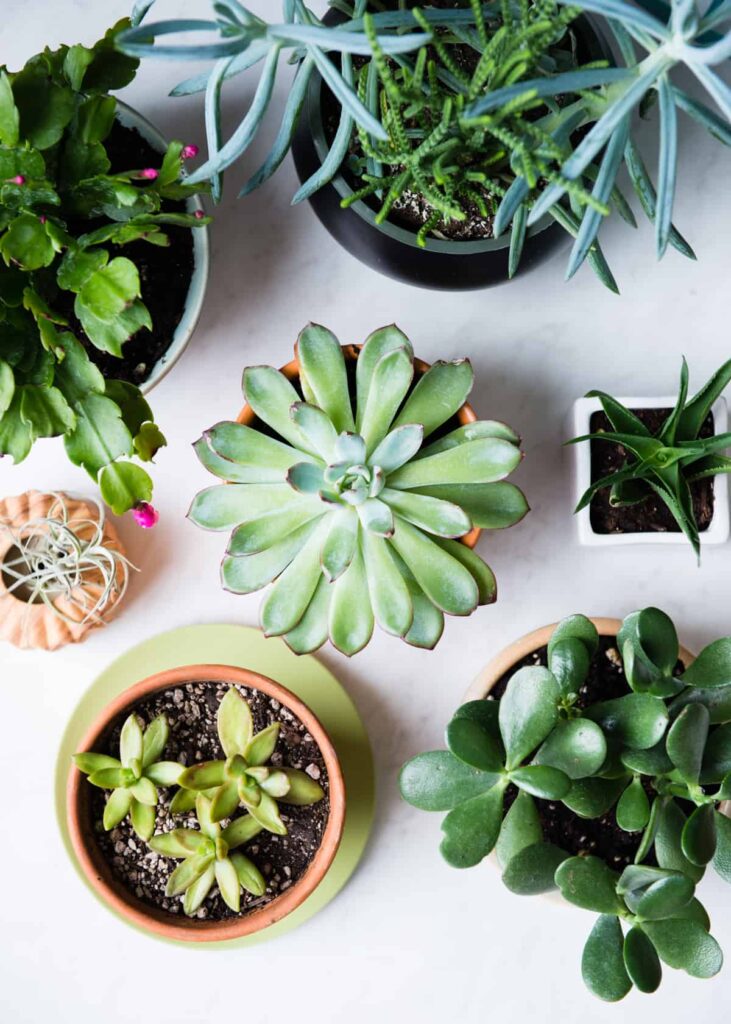
11 Low Maintenance Houseplants
- Pothos
- Philodendron
- Succulents, like jade plants, hens & chicks, and aloe vera
- Bromeliad
- Snake plant
- Air plant
- Palm
- Dracaena
- Ivy
- Ficus
- Fern
9 Winter Plant Care Tips
If you want your plants to make it through the winter in top form, here are a few easy tips and tricks you can use to give them a helping hand (with a green-thumb!):
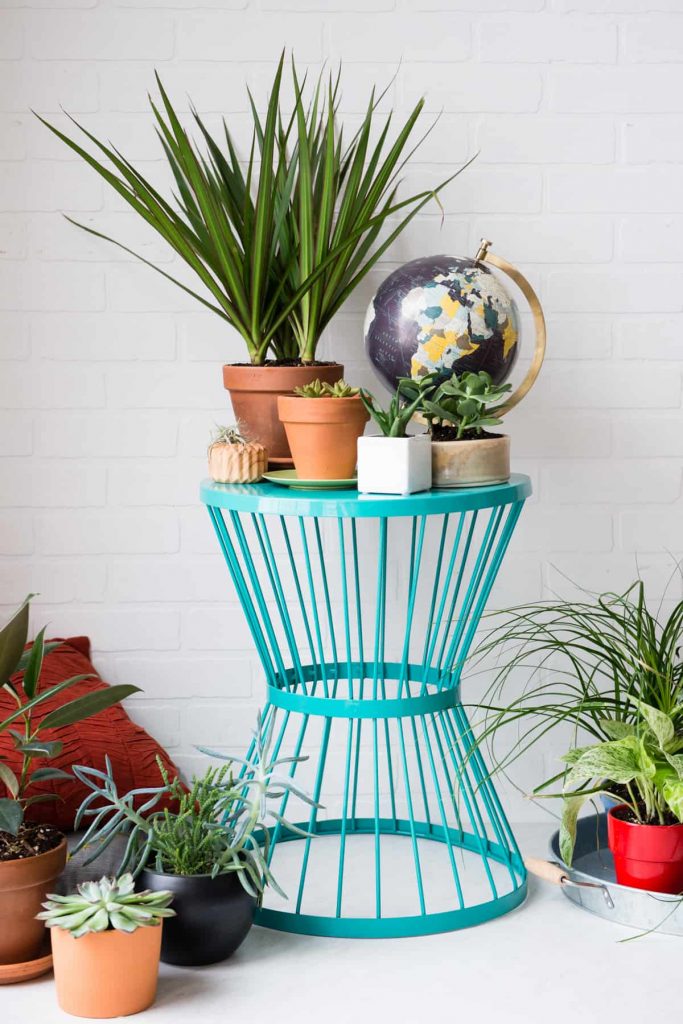
1. Make sure your plants are getting enough light
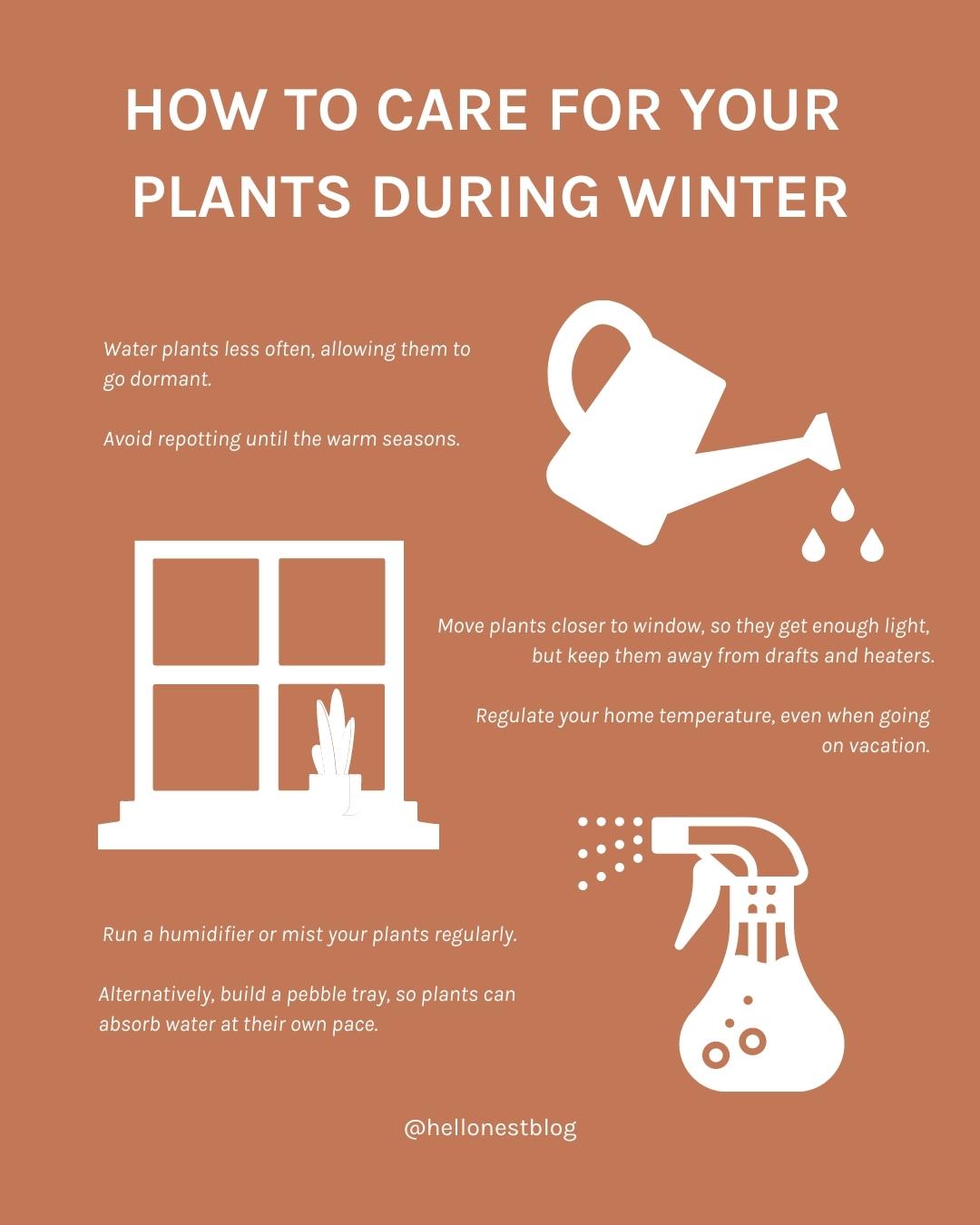
When we shift seasons and there are fewer hours of daylight, your plants that may already be situated in lower light areas may need to be moved. Think about setting your plants in a part of your home that will have access to the most sunlight (south or west facing) if possible, even if this means that for a few months out of the year one room in your home turns into a bit of a nursery for most of your plant life.
Another option would be to supplement darker areas of your home with some additional artificial light (natural, full-spectrum lightbulbs are preferable, or you could always pick up one of those handy grow bulbs meant specifically for this purpose.) Shine some lights their way for at least 6-8 hours per day to see the best results.
2. Regulate your home temperature
In the cooler months (even moderately cooler can affect plant’s ability to thrive), you’ll need to ensure that the air is kept warm enough (no lower than about 60, maximum mid 70s). This means that if you head away on vacations over the winter and typically shut off your heat, you’d be best to lend out your plants to be minded in warmer homes!
Tropical plants will be the most susceptible to the sudden cold, so if you’ve got pockets of your home that are harder to warm, keep these more fragile greens in other spaces.
3. Keep plants away from drafts
If you live in an older home like I do, there are certain windows and doors that let in the freeze even when they are closed! An energy-saving and plant-friendly tip is to tuck some of those draft dummies around the cracks to keep your heat in and the cold out. In general, try not to have your plants near doors or windows that you actively use during the colder months.
4. Run a humidifier or mist your plants regularly
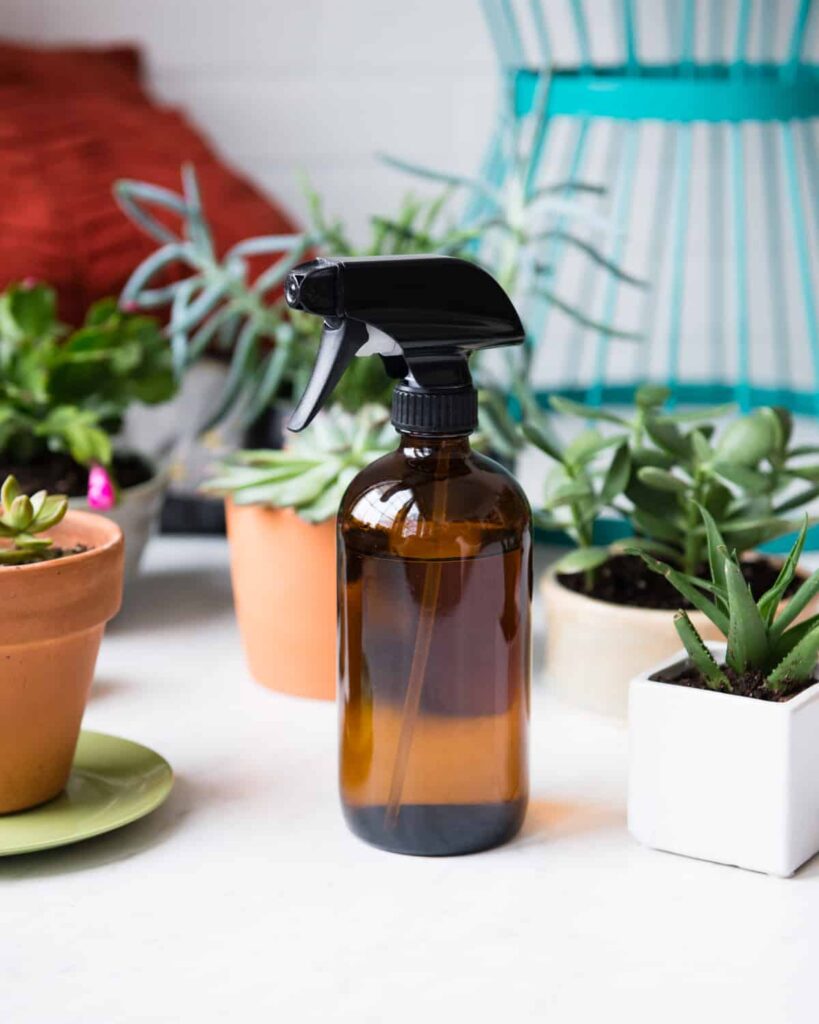
Keeping the bone-dry air of winter within the normal humidity ranges we experience the rest of the year can mean running a humidifier, or taking the time to spritz and mist around your plants. Tropical plants are cultivated to thrive in even higher humidity than most of us may find year round, so keep an eye on the leaves of your tropicals, and if they look brittle and dry, chances are it’s the low levels of moisture in the air.
5. Build a pebble tray
Each year growing up, when my father would bring in his extensive collection of bonsai plants for the winter, he would first build them these beds along the windowsill of our south-facing sun room. He filled the trays with those crushed driveway rocks, added water until only the tops of the rocks were dry, and then clustered all of his plants atop this foundation.
More eco-friendly and affordable than going out and buying/running a humidifier all winter long, and easier than having to mist, these trays got the job done with only the occasional top-up once the water had evaporated. These trays are so easy and they allow the plants to get the moisture they need from the air without having to overwater or put the roots at risk of rot.
6. Keep plants away from hot air and radiators
Not only do plants suffer when there is sudden influx of cold air, but they are also vulnerable when placed too close to hot, blowing air, or near your radiators and furnaces. When heat is directly affecting the plant, they will lose water far too quickly from their leaves, soil will dry out, and if placed on radiators, it can also damage their root systems. Warm is great; hot is not.
7. Let your plants rest and digest
Plants will generally do most of their growing, budding, blooming, and fruit producing over the warmer months. Since this is when they are most active, it’s also when they need to be fed. Over the slower months of winter, give your plants some time to hibernate and slow their growth.
Some plants may like to be fed at the beginning of the season, but in general, they can be left as they are until they awaken and start a new growing cycle in the spring. Fostering too much growth in winter can leave your plants weak and spindly.
8. Keep the plants clean
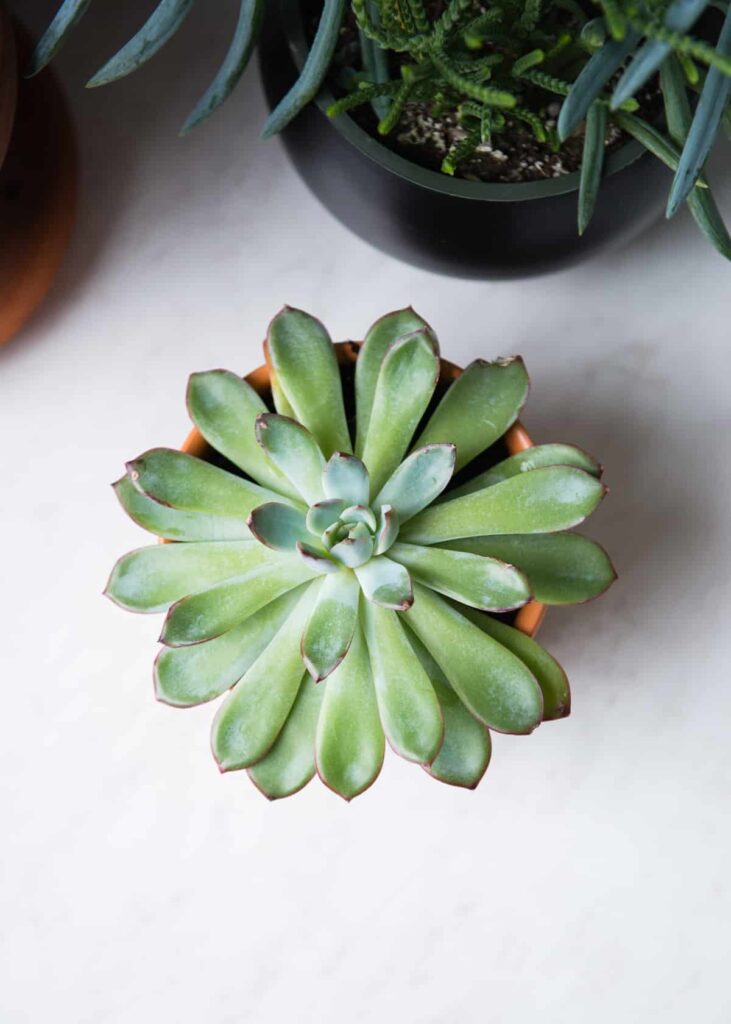
Another thing I remember from my childhood is my father milling around the house, wiping down the broad, tropical leaves to keep winter’s dry dust off (important since plants breathe through their leaves). He also gave them showers once a month; our bathtub would be filled with plants, and he’d use the shower head to spray them down.
Since most tropicals need a thorough, torrential sort of watering each time the soil dries out, a shower that can also clean off their leaves is a pretty great idea!
9. Read up on your plants
While these tips tend to work for most house plants, if you’ve got anything unique, you’ll want to investigate its particular winter-weather needs—some varietals may need more water than others, some will need a bit of a feed at the very start of the season, some will need higher temperatures and more light than others. Or you may find you have some very robust and resilient greens that won’t need any fussing around!
With just a few plant care basics under your belt (most important are finding the right balance of heat, light, and humidity), your plants will make it through the dreary winter doldrums safe and sound and ready to thrive come spring.
Remember, too, that both the library and the internet hold a wealth of information from specialists that can help you to understand the unique care that yours might require. Whether you are looking to maintain the health of your succulents, palms, citrus, or evergreens, there is additional information out there to help you succeed.
Charmaine Ng | Architecture & Lifestyle Blog says
For reasons unknown, plants always die under my care, so this was super helpful. I’ve considered investing in fake plants, but that would require cleaning too, LOL.
Charmaine Ng | Architecture & Lifestyle Blog
http://charmainenyw.com
Kaylee K says
Thank you for this post! I would love to have more plants in my apartment (and by “more” I mean I currently own 2 plastic succulents)…but I just can’t keep the real ones alive!! This post was very informative and is giving me inspiration to give it another try!
XX -KK
http://www.KayleeKarcher.com